
1. The 45°C Thermal Expansion Cycle in Gujarat
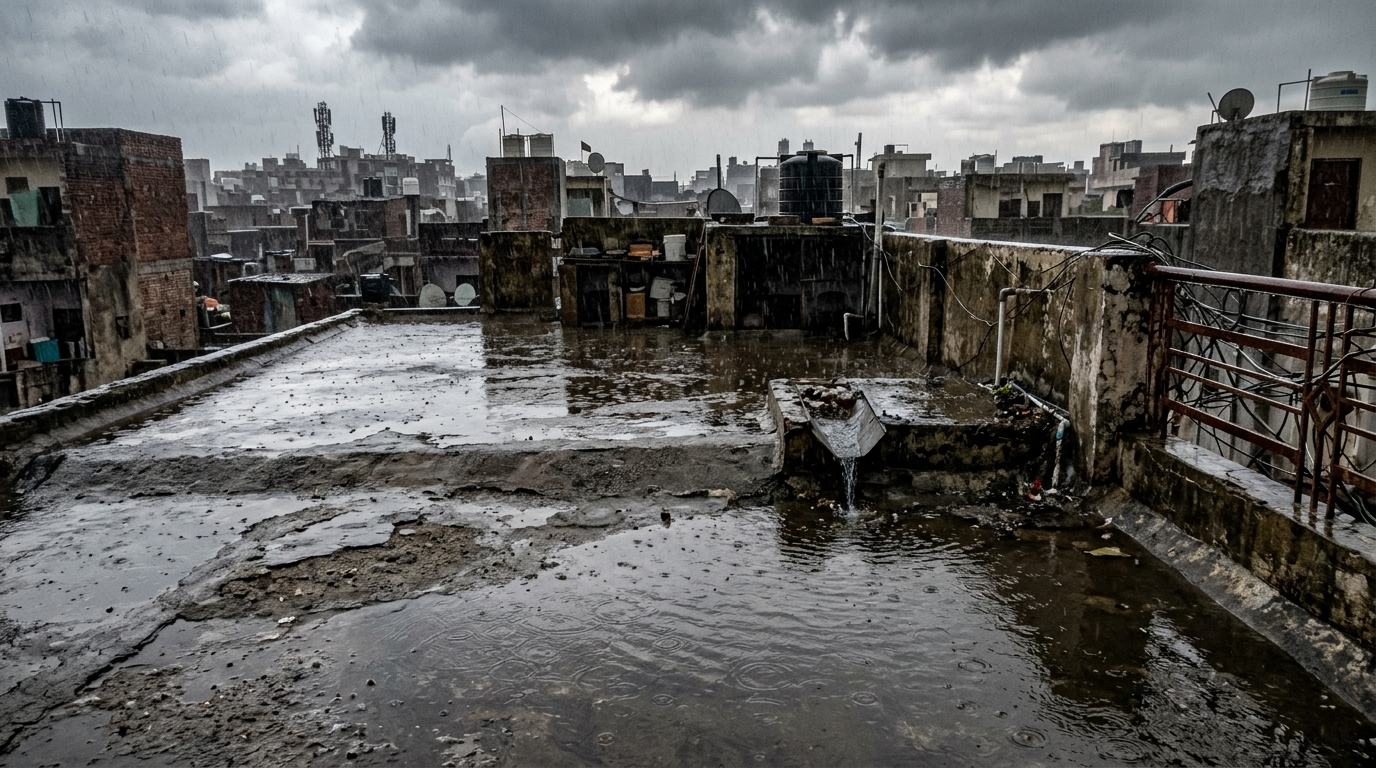
Gujarat experiences some of the most aggressive summer thermal variations in urban India. During May and June, midday roof temperatures in central Gujarat regularly cross 50°C to 55°C. At this temperature, a 1,000-square-foot reinforced cement concrete (RCC) slab and its China mosaic tile overlay expand by several millimeters.
At night, the temperature drops by 15°C to 20°C, causing sudden contraction. Over three to five years, this relentless push-and-pull movement destroys the rigid white cement grouting between China mosaic pieces and stresses the structural joints between the slab and the brick parapet wall.
2. Thermal Shock During Southwest Monsoon Cloudbursts
When the first intense southwest monsoon thunderstorms arrive, cold rainwater (approx. 22°C) hits sun-baked terrace slabs (approx. 48°C). This rapid, instantaneous temperature drop creates immense internal thermal shock stresses. Existing micro-cracks immediately snap open, creating microscopic pathways directly into the underlying screed.
3. The "Sponge Effect" of Saturated Brickbat Coba
Most residential buildings in Gujarat are constructed with a traditional "brickbat coba" waterproofing layer beneath China mosaic tiles. Broken clay bricks are porous by design to provide thermal insulation.
However, when tile grouting cracks, rainwater enters this brick layer and becomes trapped. The brickbat coba acts like an underground sponge, absorbing hundreds of liters of water. Even after the rain stops and the sun shines for two days, the trapped moisture cannot evaporate upwards through the non-porous tiles. Instead, hydrostatic pressure forces the trapped water downwards through microscopic slab fissures into your ceiling.
4. The Danger of Superficial "White Cement" Patches
Many homeowners hire local painters or handymen to smear a slurry of white cement or basic exterior paint over visible terrace cracks. This almost always fails within weeks because:
- White cement is completely rigid and possesses 0% elongation. The very next sunny afternoon, thermal expansion will re-crack the brittle cement paste.
- Slurry coats trap already-absorbed moisture underneath, accelerating rebar rust and concrete carbonation inside the ceiling slab.
5. The Proven Scientific Approach
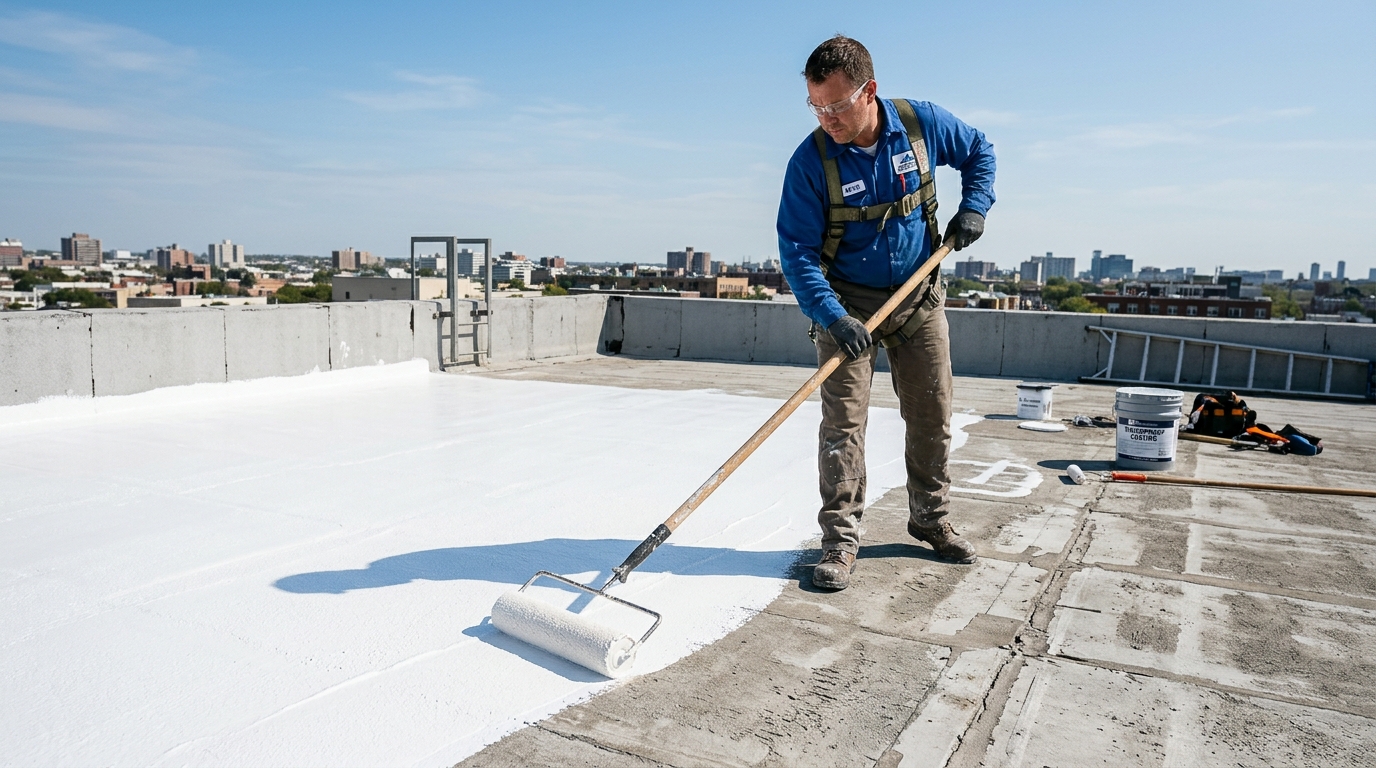
To permanently solve terrace leaks, qualified contractors follow an engineered multi-stage protocol:
- Mechanical Surface Cleaning: Clearing moss, algae, and loose grout using high-pressure jet washing or mechanical wire brush grinding.
- V-Groove Routing: Chasing all structural cracks into clean V-grooves (approx. 6mm x 6mm) and filling them with polymer-modified flexible crack sealant.
- Parapet Fillet (Coving): Constructing a 45-degree angle mortar fillet where the slab meets the vertical parapet wall, preventing water from pooling in the 90-degree corner.
- Flexible Elastomeric Coating: Applying two to three coats of UV-stable polyurethane or acrylic-polymer membrane reinforced with alkali-resistant fiberglass mesh. The membrane must have at least 250% elongation to bridge ongoing thermal movement.
Need An Expert On-Site Assessment?
Request a free connection with an independent terrace waterproofing contractor in your Gujarat locality.
Submit Free Enquiry